
-
SeaQualizerDescending Devices
Regular price $62.99 USDRegular price -
SeaYaLaterFish Release Hook
Regular price $23.99 USDRegular price -
Release Bundle
Regular price From $289.95 USDRegular price -
Sportsman's Package
Regular price $99.95 USDRegular price
Which SeaQualizer fits the water you fish
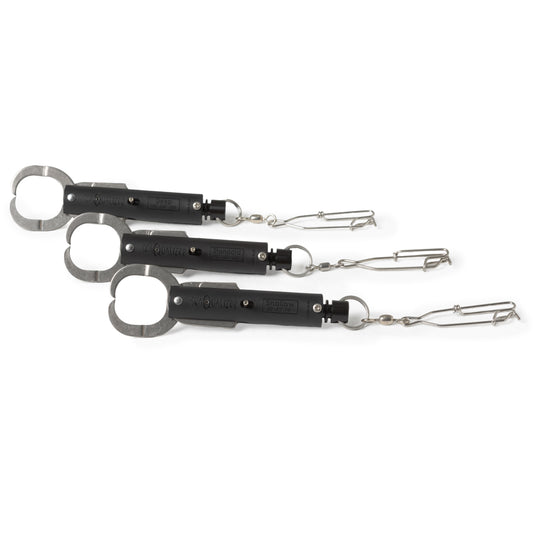
All three models work the same way and differ only in the depths they can be set to. Pick the one whose middle setting sits near the depth you fish most, not the one whose deepest setting matches your deepest trip.
- Shallow — 30, 50, 70 ft. State-water reefs, nearshore wrecks and live bottom. The right choice if your fish come up from roughly 60 to 140 feet.
- Standard — 50, 100, 150 ft. The federal-waters workhorse, and the one most Gulf and South Atlantic reef anglers end up carrying.
- Deep — 100, 200, 300 ft. Deep wrecks, ledges and the long drops where barotrauma is at its worst.
Fishing a wide range in one day? Many boats carry two: a Standard on the rail and a Shallow rigged for the inshore stops.
What you are required to carry
Reef fish anglers in federal waters are required to have a descending device or venting tool on board, rigged and ready to use — not still in the package, not buried in a hatch. Florida applies its own requirement in state waters. Which species and which waters are covered changes often, so we keep the rules in one place and keep them up to date: Descending device requirements in 2026, and our regulations and resources page.
How the release actually works
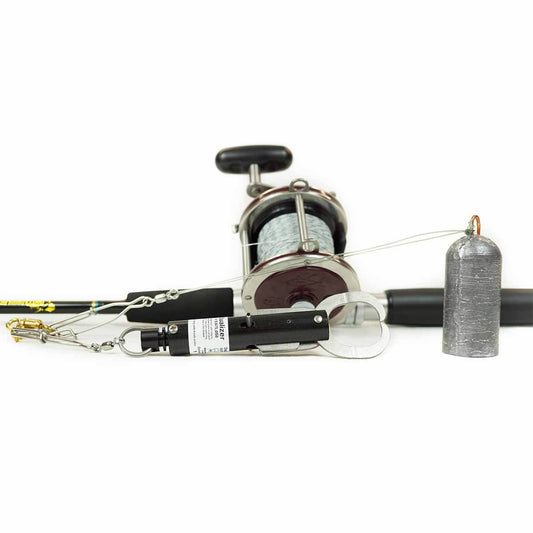
A SeaQualizer reads water pressure, not line out. You set the depth, clamp the jaws onto the fish's lower lip, and send it down on a weighted line. When the device reaches the pressure of the depth you selected, it opens and the fish swims off — no tugging, no counting cranks, no judgment call in a sloppy sea. The clamp holds the whole way down, so a green fish cannot kick free at the surface and float off before it has recompressed.
Every SeaQualizer is engineered to release at the depth it is set to or slightly shallower — the design errs shallow, not deep — which is what lets you set one close to the bottom without planting a fish in it. The reasoning behind that one-sided design is worth two minutes: how SeaQualizer release depth works.
What else you need to run one
The device is one part of a working setup. You also need weight to carry the fish down, a way to attach it, and something to lower it on:
- Weight. Enough to sink a buoyant fish quickly and steadily. How much depends on the size of the fish — the FAQ on each device's product page gives the guideline we stand behind.
- A heavy-duty 3-way swivel to connect device, weight and line without a tangle. Ours are in terminal tackle.
- A dedicated rod or handline. Anything you do not mind keeping rigged. The point is that it stays within arm's reach — a descending device you have to build a setup for is a descending device that stays in the bag.
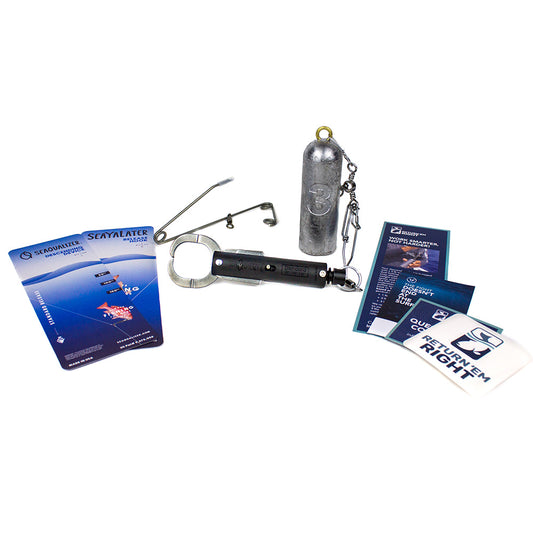
If you would rather not assemble it yourself, the Sportsman's Package bundles a Standard device with a swivel and a SeaYaLater release hook, and the Release Bundle adds a purpose-built release rod, reel and lead so the whole thing lives ready on the boat.
Questions anglers ask before buying
Does it hurt the fish to clamp it by the jaw? No. The jaws grip the lower lip and hold, then let go on their own at depth. Nothing punctures the fish, which is the difference between descending and venting.
Can I reuse it? Yes — indefinitely. Rinse it in fresh water after a trip and it rides in the tackle bag until the next float shows up boat-side.
What if I fish deeper than my model's deepest setting? You do not have to send a fish all the way back down for recompression to do its work. Standard fisheries guidance is to release at or below roughly half the depth the fish came from, which is why a Standard model still covers plenty of deep trips. More on how release depth works.
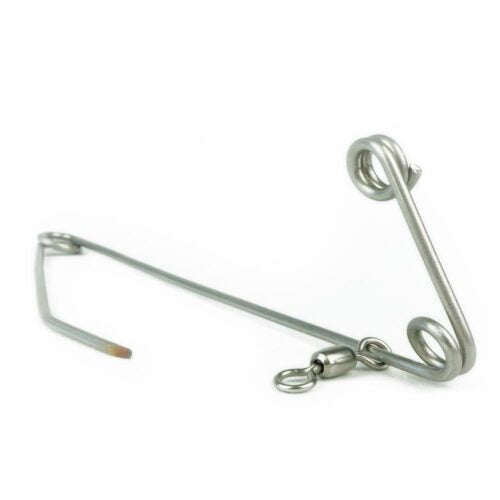
What about the SeaYaLater? It is our release hook — a simpler, lower-cost way to send a fish down that relies on you to pull it free rather than releasing on its own. Plenty of boats carry both: a SeaQualizer as the primary and a SeaYaLater as the backup that anyone aboard can use.